Industry Overview
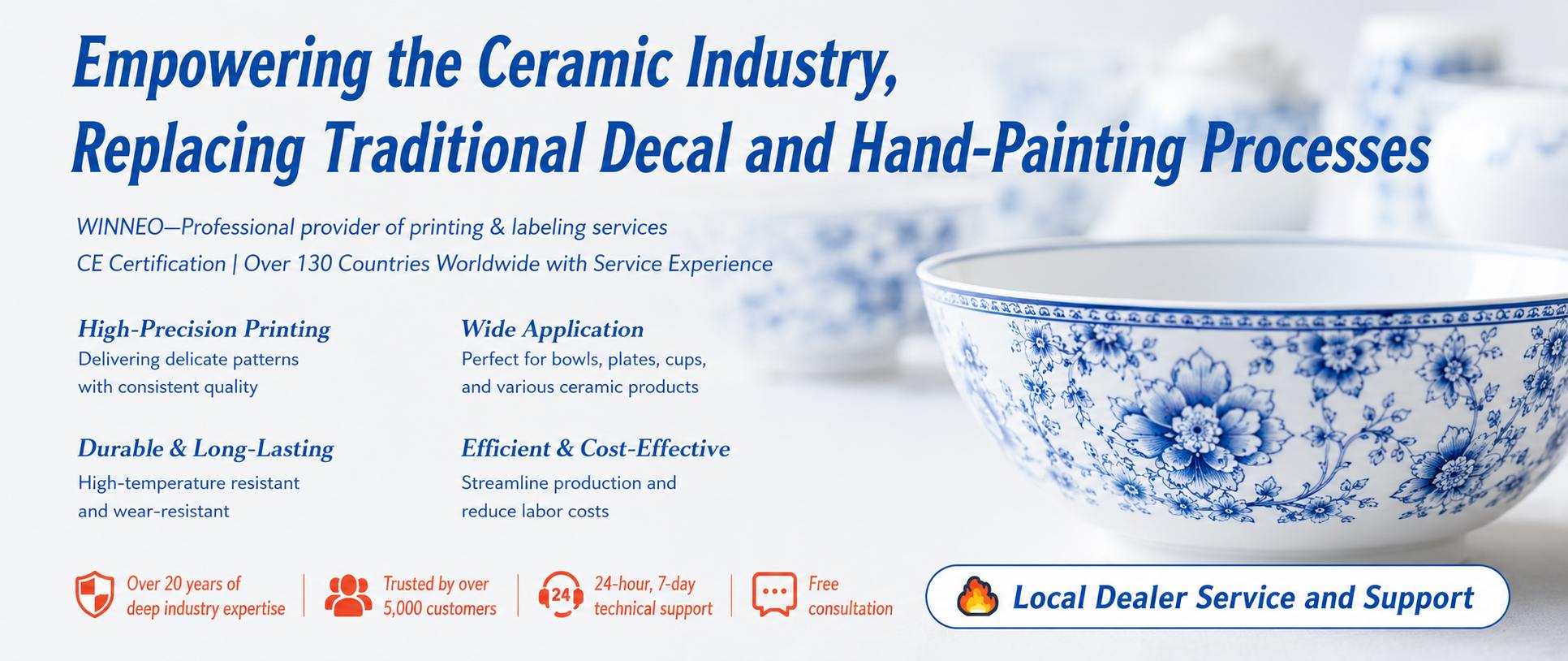
*Contact WINNEO for free solution consultations and industry white papers.
Current Status of Printing in the Ceramic Industry
The global ceramic industry is entering a new era of high-end development and personalized customization. As consumers' demands for home aesthetics, brand recognition, and food safety continue to rise, ceramic printing and decoration processes have become a core link in driving product added value.
1. Difficulties in Curved Surface Printing
Most ceramic products feature curved surfaces such as cup bodies, bowl arcs, and vases, making flat printing equipment inapplicable. Printing blind spots exist on uneven areas like handles and spouts, limiting design flexibility and preventing manufacturers from taking on complex orders.
2. Traditional Decal & Hand-Painting Processes Face Production Capacity Bottlenecks
Hand-painting is slow and cannot meet peak-season order demands. It also relies heavily on experienced labor, leading to high labor costs.
3. Underglaze Decal Process Aligns with Environmental Protection & Food Safety Compliance Requirements
The structure of the underglaze process is: Ceramic Body → Pigment Pattern → Cover with a Layer of Transparent Glaze → High-Temperature Firing. The ink is sealed under the transparent glaze layer, leaving a complete, smooth, and dense vitreous glaze surface on the exterior. Contact only occurs with the surface glaze layer, with no direct exposure to the ink.



 IPv6 Network Supported
Sitemap | XML | Blog | Privacy Policy
IPv6 Network Supported
Sitemap | XML | Blog | Privacy Policy
Work Time
Receive your information 24 hours a day
Beijing time: Monday to Friday 9:00-17:30
 English
 English
 Русский
 Italiano
 Español
 عربي
عربي 한국어
한국어 Türk
Türk Polski
 ไทย
ไทย Tiếng Việt