In the modern manufacturing and packaging landscape, the visual presentation of a product is just as vital as the quality of the product itself. Whether it is a sleek glass bottle containing a premium beverage or a flexible plastic bag holding organic snacks, the label serves as the primary bridge between the brand and the consumer. However, applying these labels with precision, speed, and consistency is a complex engineering feat.
Understanding how labeling machines adapt to different materials—specifically the rigid, cylindrical surfaces of glass bottles and the flexible, often uneven surfaces of plastic bags—reveals the incredible versatility of packaging technology.
The Fundamentals of Labeling Technology
At its core, any labeling system must synchronize three critical movements: the speed of the product conveyor, the dispensing speed of the label, and the application pressure. While the underlying logic remains consistent, the hardware configurations vary significantly based on the container's geometry.
For small-scale producers or boutique brands, a Desktop Labeling Machine provides the perfect balance of footprint and efficiency. These compact units are designed to handle various containers, allowing businesses to transition from manual "peel-and-stick" methods to automated precision without requiring massive industrial floor space.
The Anatomy of an Automatic Labeler
Every labeling machine generally consists of:
The Unwind Stand: Holds the roll of pressure-sensitive labels.
The Peeler Plate: A sharp edge that forces the label to separate from its backing paper (the liner).
The Drive Motor: Controls the timing of label dispensing.
The Applicator: The component (roller, brush, or vacuum) that secures the label to the product.
Precision on Curves: Labeling Glass Bottles
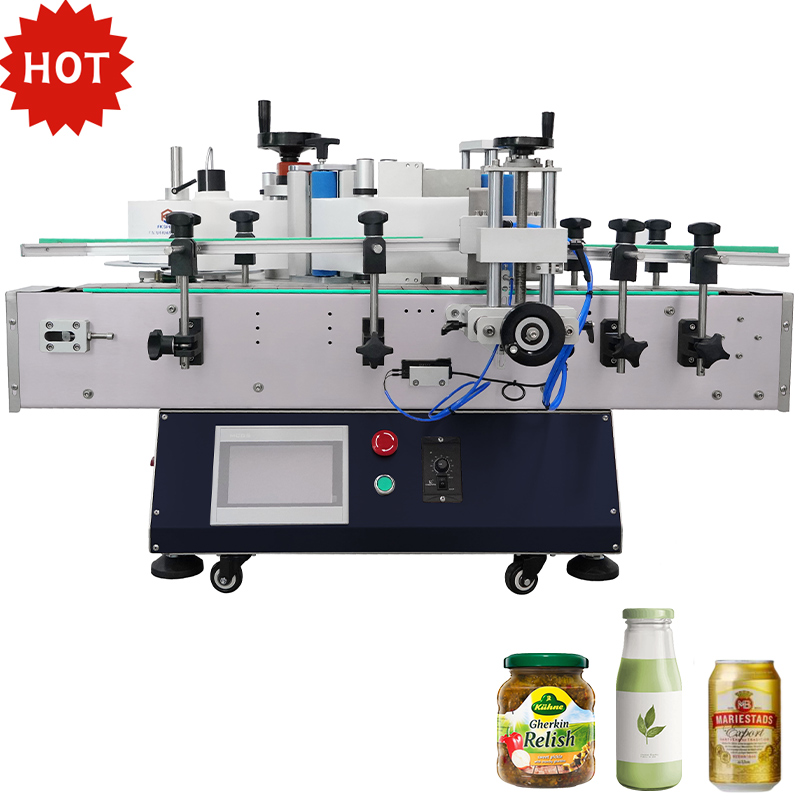
Glass bottles present a unique challenge due to their rigidity and weight. Most glass bottles are cylindrical, requiring a "wrap-around" technique to ensure the label is centered and free of bubbles.
The Wrap-Around Method
When a glass bottle moves down the line, it is usually spaced out by a timing screw or a separator wheel to ensure it hits the labeling head at the exact right moment. For round containers, a Round Bottle Labeling Machine utilizes a specialized "wrap station."
As the bottle reaches the applicator, the leading edge of the label is tacked onto the glass. Simultaneously, a motorized belt or a set of rollers spins the bottle in place. This spinning motion pulls the rest of the label onto the surface, ensuring a seamless 360-degree application or a perfectly aligned front-and-back placement.
Overcoming Glass Imperfections
While glass is rigid, it isn't always perfect. Minor variances in bottle diameter (known as "taper") can cause labels to "spiral" or tilt. High-end round bottle labeling machines compensate for this by allowing the labeling head to tilt slightly, matching the specific contour of the bottle. This level of adjustment is why automated systems far outperform manual labor in high-volume beverage and pharmaceutical industries.
Stability on Flexibility: Labeling Plastic Bags
Labeling plastic bags or pouches is a completely different science. Unlike glass, plastic bags are flexible, light, and prone to wrinkling. If you try to label a bag while it is filled with product, the uneven surface often leads to trapped air and crooked labels.
The "Flat-First" Approach
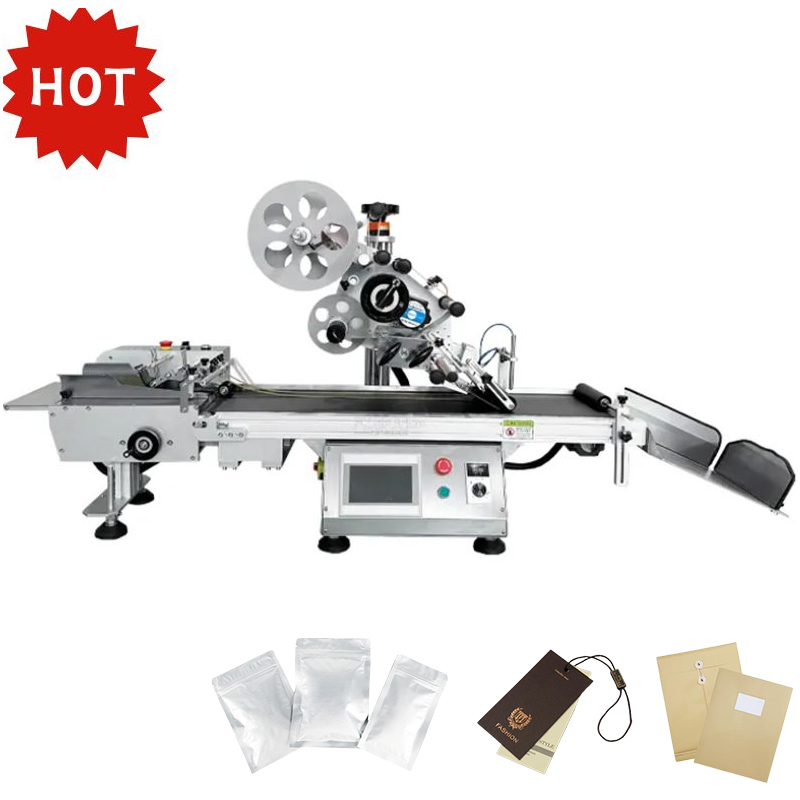
To achieve a professional look, plastic bags are almost always labeled while they are empty and flat. This ensures the surface is as predictable as a sheet of paper. To handle this, manufacturers use a Flat Labeling Machine for bags equipped with an automatic friction feeder.
The process works as follows:
1. Feeding: A stack of empty bags is placed in the feeder. A high-speed friction wheel "shucks" the bottom bag from the stack and flings it onto a vacuum conveyor belt.
2. Stabilization: The vacuum belt sucks the bag down flat, preventing it from shifting or fluttering as it moves toward the labeling head.
3. Application: The label is dispensed from above. Because the bag is flat and supported by the conveyor, the machine can apply significant pressure via a rubber roller to ensure the adhesive bonds instantly to the plastic.
Key Differences in Material Handling
|
Feature |
Glass Bottle Labeling |
Plastic Bag Labeling |
|
Material State |
Rigid and heavy |
Flexible and lightweight |
|
Common Issue |
Bubbling and skewing |
Wrinkling and static |
|
Product Handling |
Spaced by timing screws |
Fed by friction feeders |
|
Application Style |
Wrap-around or side-panel |
Top-down flat application |
The Role of Adhesives
The material also dictates the type of adhesive used. Glass is non-porous and can be cold or damp (especially in beverage filling), requiring moisture-resistant adhesives. Plastic bags, often made of polyethylene or polypropylene, have "low surface energy," meaning labels need a high-tack adhesive to prevent the edges from peeling up over time (a phenomenon known as "flagging").
Why Automation Matters
Switching from manual application to a desktop labeling machine or a fully integrated line offers three primary benefits:
1. Accuracy and Branding
A crooked label on a luxury perfume bottle or a misaligned sticker on a coffee bag sends a signal of poor quality to the consumer. Automation ensures that every single unit looks identical, reinforcing brand trust.
2. Throughput Efficiency
A manual laborer might label 5 to 10 bottles a minute with varying degrees of accuracy. A basic Round Bottle Labeling Machine can easily process 30 to 60 units per minute, while high-speed industrial lines can exceed 200 units per minute.
3. Reduced Waste
Manual labeling often results in "lost" labels due to human error—misalignment usually means the label is peeled off and thrown away. Machines use sensors (photoelectric eyes) to detect the product and the label gap, reducing waste to nearly zero.
Choosing the Right Machine for Your Business
If you are a growing business, the choice of equipment depends entirely on your packaging format.
For Craft Brewers and Wineries: A Round Bottle Labeling Machine is the industry standard. Look for models that can handle different bottle heights and diameters to future-proof your production.
For Food Producers and Apparel Brands: If you are packing items in stand-up pouches or poly-mailers, a Flat Labeling Machine for bags is essential. The inclusion of a feeder is the "secret sauce" here; without a feeder, you are still stuck feeding bags one-by-one by hand.
For General Versatility: If your product line includes both jars and boxes, a modular Desktop Labeling Machine platform allows for the most flexibility.
The Future of Labeling
As we move toward 2026 and beyond, labeling technology is becoming even smarter. We are seeing the integration of vision systems that check for label presence and OCR (Optical Character Recognition) to ensure that expiration dates printed on the labels are legible.
Furthermore, the rise of eco-friendly packaging means machines are being recalibrated to handle thinner, compostable labels and "linerless" labeling systems that eliminate the waste of backing paper.
Regardless of the material—be it the classic elegance of glass or the modern convenience of plastic—the technology behind the label remains a cornerstone of the global supply chain. By investing in the right automated solutions, businesses ensure that their first impression on the retail shelf is a perfect one.



 IPv6 Network Supported
Sitemap | XML | Blog | Privacy Policy
IPv6 Network Supported
Sitemap | XML | Blog | Privacy Policy
Work Time
Receive your information 24 hours a day
Beijing time: Monday to Friday 9:00-17:30
 English
 English
 Русский
 Italiano
 Español
 عربي
عربي 한국어
한국어 Türk
Türk Polski
 ไทย
ไทย Tiếng Việt